
Upper GI Endoscopy
An upper GI endoscopy (EGD) is a simple procedure that allows your doctor to look inside your esophagus, stomach, and upper small intestine using a thin, flexible tube with a tiny camera. It helps identify the cause of symptoms like heartburn, stomach pain, nausea, or difficulty swallowing so your doctor can better understand your condition and recommend the right treatment. It also allows us to look for reflux, sizing hiatal hernias, Barrett’s esophagus surveillance, and diagnostic upper endoscopy.

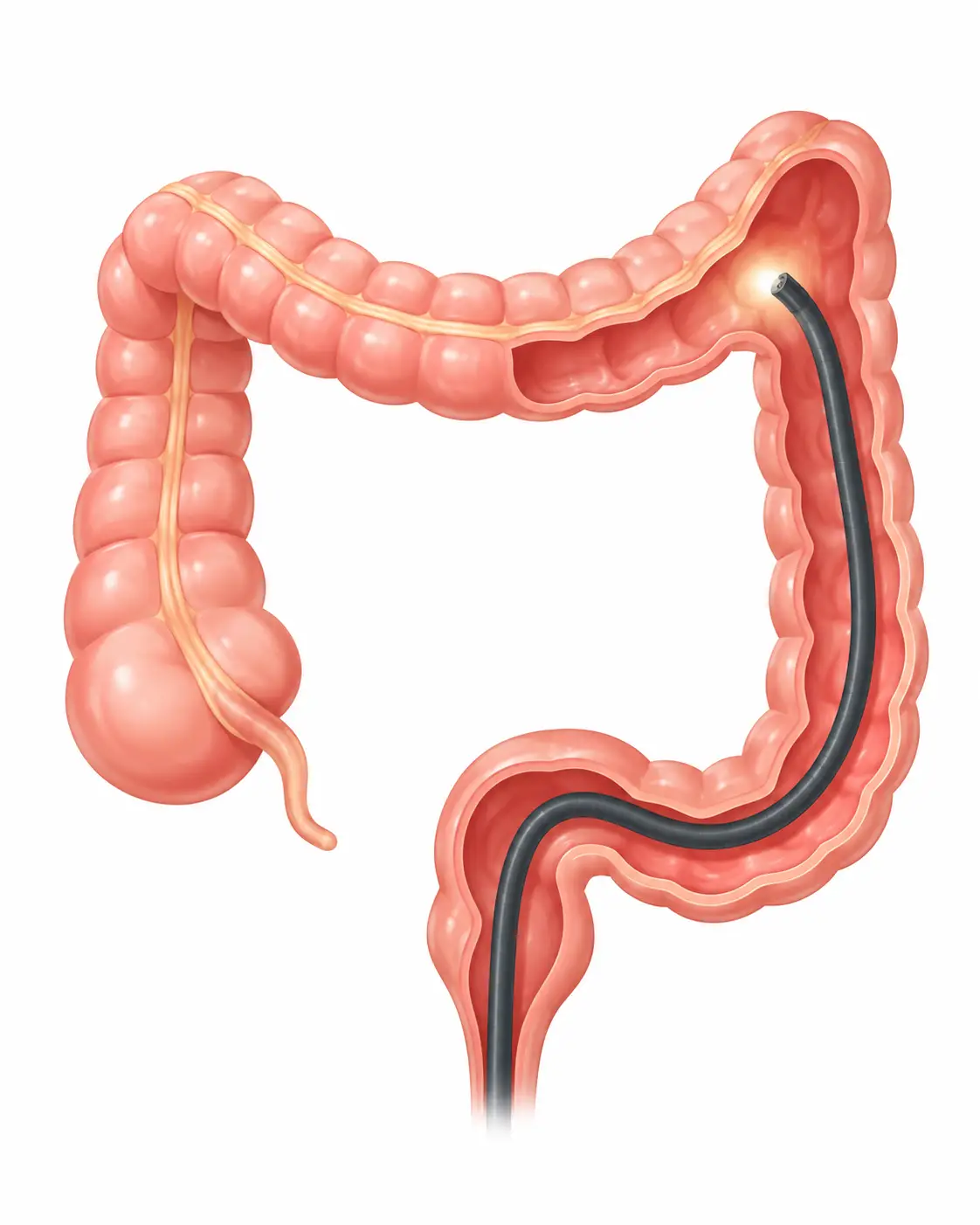
Colonoscopy
A colonoscopy is a common procedure that helps your doctor check the health of your colon and rectum using a thin, flexible tube with a small camera. It can help find the cause of digestive symptoms, detect and remove small growths called polyps before they become a problem, and screen for colorectal cancer. Regular screenings can help protect your digestive health and catch potential issues early. This includes screening colonoscopy, surveillance for polyps, and diagnostic colonoscopy.
Feeling better is closer than you think
Frequently
Asked Questions
Questions we’re often asked about Colonoscopies
Q1:When should I get a screening colonoscopy?
Most adults at average risk should begin colon cancer screening at age 45. If you have a family history of colon cancer or polyps, or experience symptoms such as rectal bleeding, your doctor may recommend screening earlier. Talk with your doctor about the right screening schedule for you.
Q2: How do I prepare for my procedure?
For a colonoscopy, you’ll need to follow specific bowel preparation instructions to help ensure your colon is clean and your doctor can get a clear view. For an upper GI endoscopy, bowel preparation is not required, but you’ll need to follow instructions about when to stop eating and drinking before your procedure. Always follow the preparation instructions provided by your care team.
Q3: Will I be asleep during my procedure?
You’ll receive medication through an IV to help you relax and stay comfortable during your procedure. Depending on the type of sedation used, you may be asleep or very drowsy. Your care team will monitor you throughout the procedure to help ensure your safety and comfort.
Q4: What happens if a polyp is found?
If a polyp is found during your colonoscopy, it can often be removed during the same procedure. The tissue is then sent to a laboratory for testing. Your doctor will review the results with you and explain whether any follow-up care is needed.
Q5: Can I drive myself home after my procedure?
No. Because sedation can affect your alertness and reaction time, you must arrange for a responsible adult to drive you home after your procedure. You should also follow your care team’s instructions about when you can safely resume your usual activities.